Borrow the best parts of academia and make them work for your personal growth. [ Detailed How-To + free PDF ]
It was a summer evening after the kids had gone to bed. When our college students are home, my husband and I have a routine of lounging on the couches with books or scrolling on social media for a bit. We often share what we read or whatever random video we find.
Quick summary: She asked if anyone knows how to create a curriculum for furthering their own learning. She talked about being paralyzed by choice, not knowing where to start, and not knowing how to map it out.
It was one of those posts that I thought about the next day and it sparked ideas within me to share here.
You all know that being intellectually alive has radically changed my life and given me a fresh perspective in mid-life. I went from being an angry mom to someone who makes space for hobbies and rediscovered deep joy in learning. This has changed my relationships, free time, and even my spending habits.
I enjoy making a life style of learning more approachable for others.
I got you if: you miss taking structured classes, you want to approach your personal learning in a more academic way, or you hope to reach a specific goal.
Post Overview:
– How to choose personal curriculum topics?
– Deciding how to divide up your time.
– Laying out the material in a sustainable way.
– Creating a syllabus / course map for the semester.
– Mapping out weekly goals.
– Celebrating milestones.
Choosing personal curriculum topics:
Similar to choosing a hobby, this process can be as unique as you are.
I recommend starting with what sparks your interest.
If you want to take a more academic approach I would begin with the basic subjects but add some whimsy to it.
The beauty of a personal curriculum is that there are no grades, deadlines, or finals. You can “enroll” in one or two classes this season and move at your own pace.
Action Step: Make a quick list of what grabbed your attention, then choose 2.
I have found that setting calendar specific personal goals helpful in actually making progress. I adjust my planning depending on my time constraints, caregiving tasks, and other commitments.
shorter sprints at about 6-8 weeks (one topic at a time during a busy season)
1 – 2 topics to focus on for the season (fall, winter, spring, summer)
I find that no matter what I am learning about, having a home base keeps me focused.
I choose a specific book, YouTube channel, or reading list to keep me grounded in the subject. From there I can divide my time into chapters, categories, or books read.
Sustainable planning: In the Table of Contents there are 2 distinct sections to the book. “Getting Started” = 7 topics / “Ideas for Drawing” = 10 topics + drawing prompt. I could invest 45 min to 1 hour at 2 times per week and finish the book in about 8 weeks.
If I had more time during the week I could add in some YouTube tutorials based on the specific drawing prompt. (For example p.102 mentions architecture and perspective drawing.) Or I could stretch it to 10 weeks if the kids get sick or we have an out of town trip planned.
Action Step: What book (or other learning tool) will be your home base?
In academia, a syllabus is essentially a roadmap for a class.
It sets expectations, outlines the learning journey, and helps both teacher and student know where they’re headed. You can borrow those same principles for a personal curriculum.
Key Elements of a Syllabus:
Course Objectives
What do you want to learn, practice, or experience by the end?
(e.g., “Be able to cook 5 new international dishes” or “Read 6 novels by women authors.”)
Course Materials
Texts, resources, tools, or supplies needed.
(Books, podcasts, trail maps, yoga mat, art supplies, etc.)
Schedule / Timeline
How long will this “course” last? A semester, a month, a season?
Break it down into weeks or modules for structure.
Reaching milestones deserves to be noticed. It does not have to be a big event, but it helps to pause and see how far you have come.
Small or large, these markers remind you that the effort you put in is paying off.
Celebrating is also more meaningful when you share it. Invite a friend to join you for coffee and talk about what you learned. Share a photo of your finished project with your family. Treat yourself to a favorite meal or a slow day of rest.
The point is not to perform for others but to honor the progress and joy that comes with building your own personal curriculum.
A few ideas:
Host a “graduation lunch” — invite a friend or two to hear about what you’ve learned. Meet up for burgers and share your milestone.
Create a mini certificate — design a playful award for yourself and hang it where you’ll see it.
Share a progress post — write a short update in a journal, blog, or even a quick text to a friend.
Plan a themed night — watch a movie, cook a meal, or listen to music connected to what you just finished.
Treat yourself — buy fresh flowers, a new book, or enjoy a favorite dessert.
Take a reflection walk — head outside and think through what you gained from the experience. (bonus: journaling your thoughts after)
Mark your progress visually — add a sticker, doodle, or note on a calendar or in your planner.
Action Step: What will you do to mark significant milestones in this learning journey? Make a plan to involve others and celebrate in a simple way.
After this post got so much attention and positive feedback, it sparked a fun creative project for me! 😁
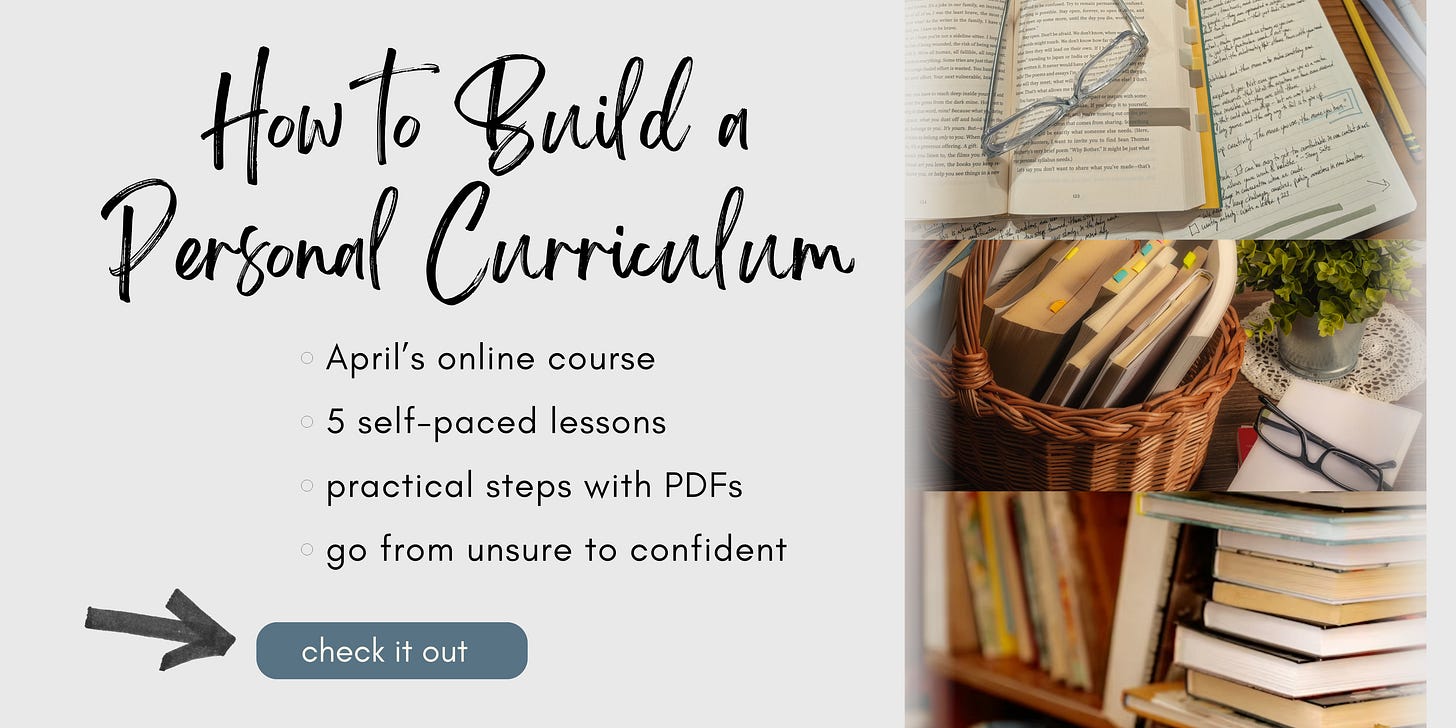
My online course will give you direction without adding more noise to your life. I’ll walk you through the exact steps to build a Personal Curriculum that actually fits your busy schedule (including some roadblocks that will keep you stuck). Full of simple steps, helpful PDFs, and space to learn at your pace.
One of the frustrations of adulting is moving away from the academic year full of learning and new ideas and into endless careers and monotonous work days.
I have found that creating my own personal curriculum is a way back to joy and delight. It probably seems like “too much” to others. And that’s okay. It’s not for everyone or every season. But if you are inspired by this post I encourage you to try it out!
Start small and build a sustainable schedule.
Give yourself grace for when (not if) you get behind. Set backs do not erase your progress. Celebrate your wins, gold stars, and fun moments.
I am excited for you!
📝Happy Learning!
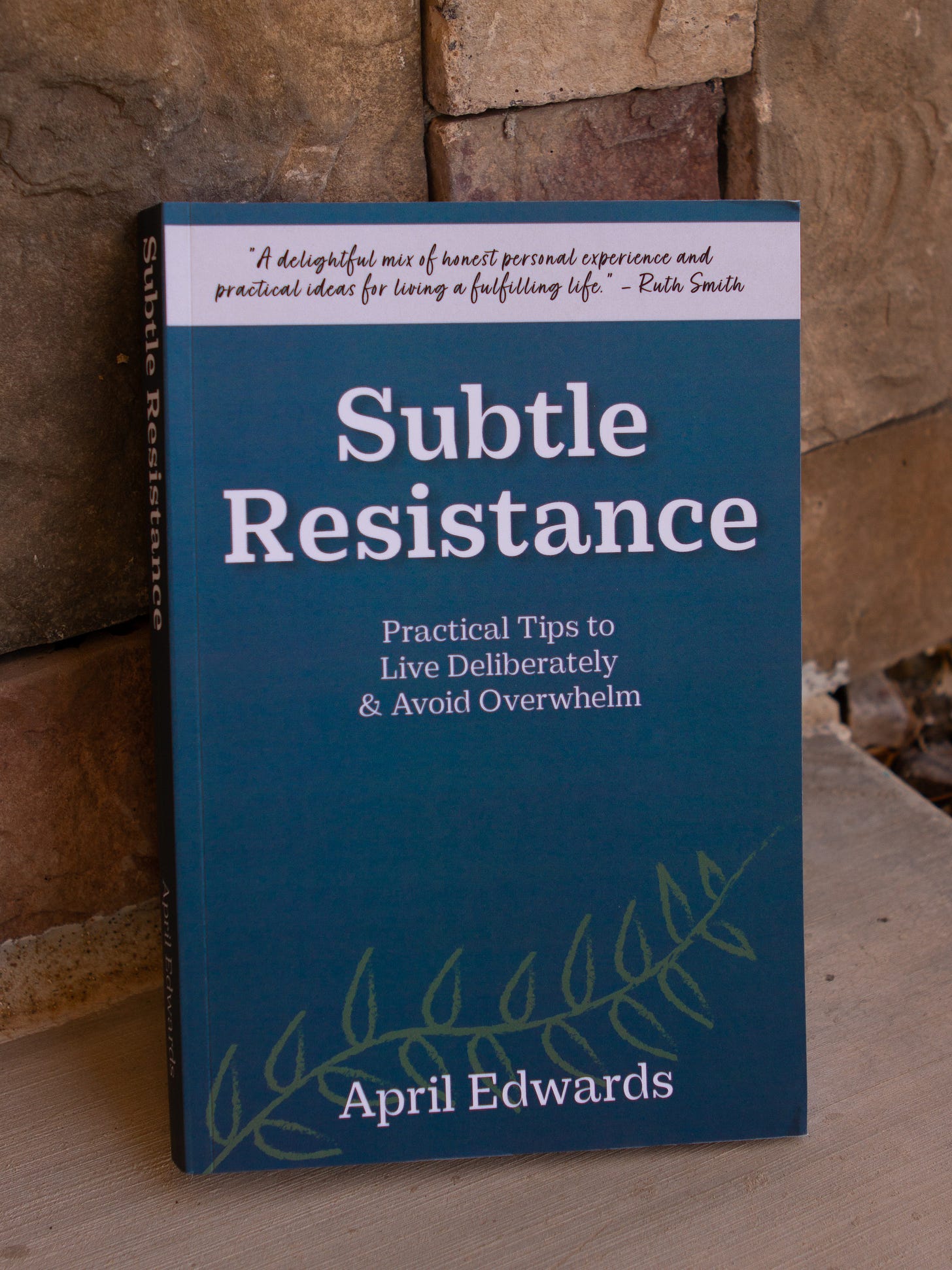
I dive deeper into ways to make space for personal growth in my book Subtle Resistance.