Bible study tips and ways to grow in your faith
a note from April:
While I don’t typically share in detail about my faith here on my blog, a recent meeting in The Mind Gallery and serving as a leader at my church’s High School Summer Camp sparked a practical post to share with you all. 🩵
In the 30ish years that I have been a Christian, I have experienced a wide variety of Bible Study and Quiet Times (moments alone with God).
I’ve been an eager student reading the entire Bible in a year, exhausted young mom struggling to just attend church, a grieving soul searching the Psalms, and attentive scholar using my Hebrew/Greek translation guide.
Faith in God is a relationship that must be cultivated over time with intention.
No one suddenly arrives later in life with peace, joy, love for others, patience, and knowledge of scripture. There is a careful choosing that happens over years, a depth of relationship, and understanding of the Holy Spirit’s quiet voice.
The most effective way to get to that place is to methodically spend time in God’s Word regularly.
Hopefully, this post will give you some fresh ideas to do just that. 🩵
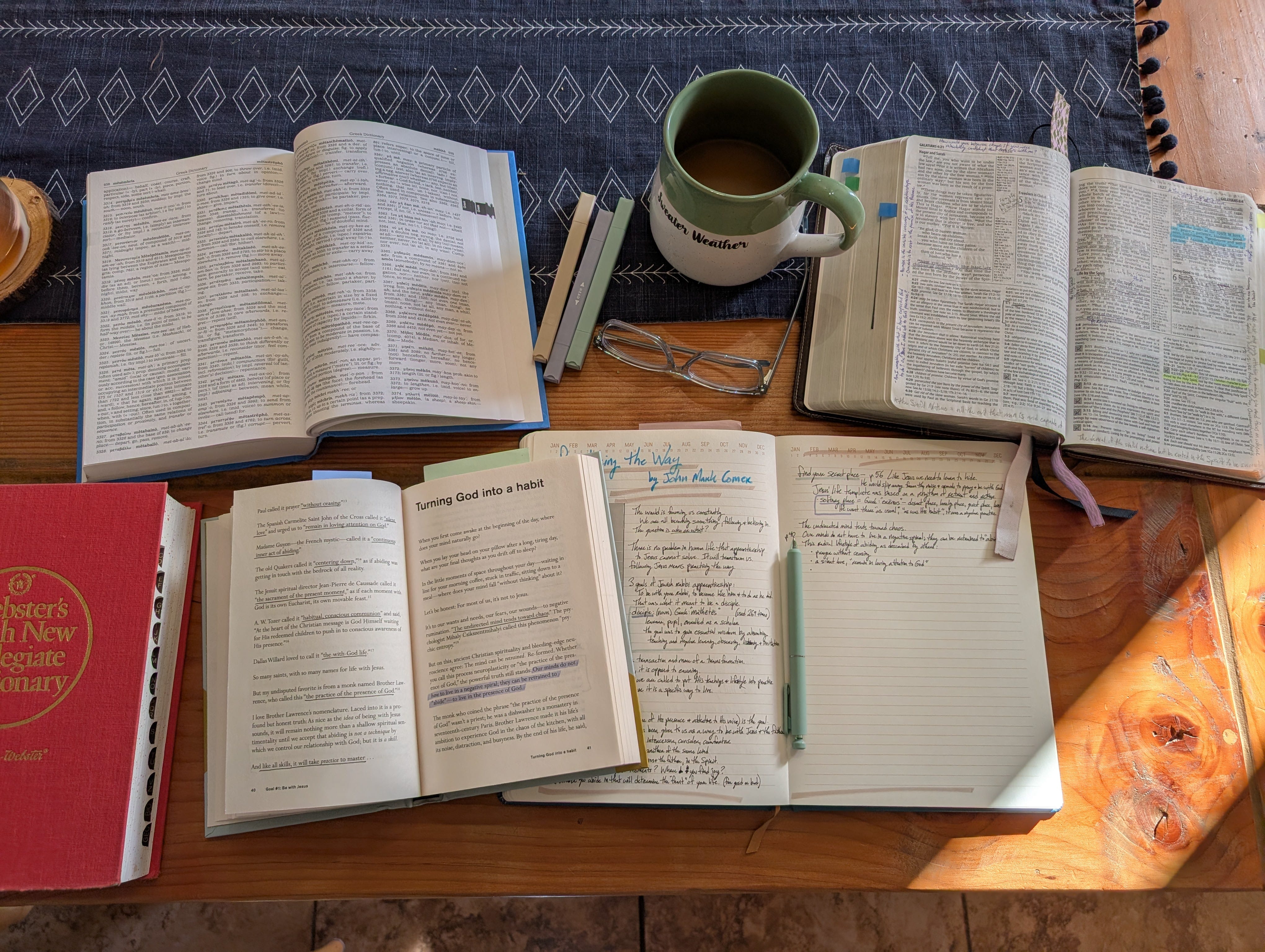
In different seasons it can be helpful to try something new to support your commitment or bring excitement back into a routine practice.
Similar to meeting a friend for an impromptu lunch or taking your spouse on a day trip adventure, adding new ideas to your faith routines can shake up the monotony and deepen your relationship.
I believe that we have a loving God who is ready to meet with us, care for us, and love us where we are. Like any relationship, things can grow stale or boring. So let’s mix it up and find new ways to connect with Him.
[note: this post is NOT sponsored, I just want to share what has worked for me].
Ideas to Refresh Your Time with God
.
My #1 Tip: Do not try to apply all of these at once.
Just pick 1 or 2 that grab your attention and make them work for you.
This post is not about adding to your already long To Do List. It is about reviving a relationship that might be feeling a bit distant or predictable. You can make a few small changes to feel big results.
Okay… on with the practical ideas! ⬇️
.
Infuse Creativity:
Often when studying the Bible is discussed the main visual example involves reading, taking notes, and memorizing long passages. But what if your personality or lifestyle does not match this study method? Let’s approach it like any other subject.
- Book of Common Prayer — I have found it grounding to read prayers that are liturgical and have been spoken by countless people over a long stretch of decades.
- Art Study & Poetry —Inspiration from believers can come from a variety of places and from time periods that feel far away. Check out this Not-So-Quiet Time: The Gospel of John Study
- Daily Audio Devotionals — I highly recommend the Lectio 365 app
- Physical movement — over the years I have listened to my favorite Christian playlists during walks, paired stretching with prayer, and I’ve attended scripture based yoga classes.
- Audiobooks —There are so many excellent books written by intelligent and Biblically-literate people living out their faith. Here are few favorites that radically changed my perspective:
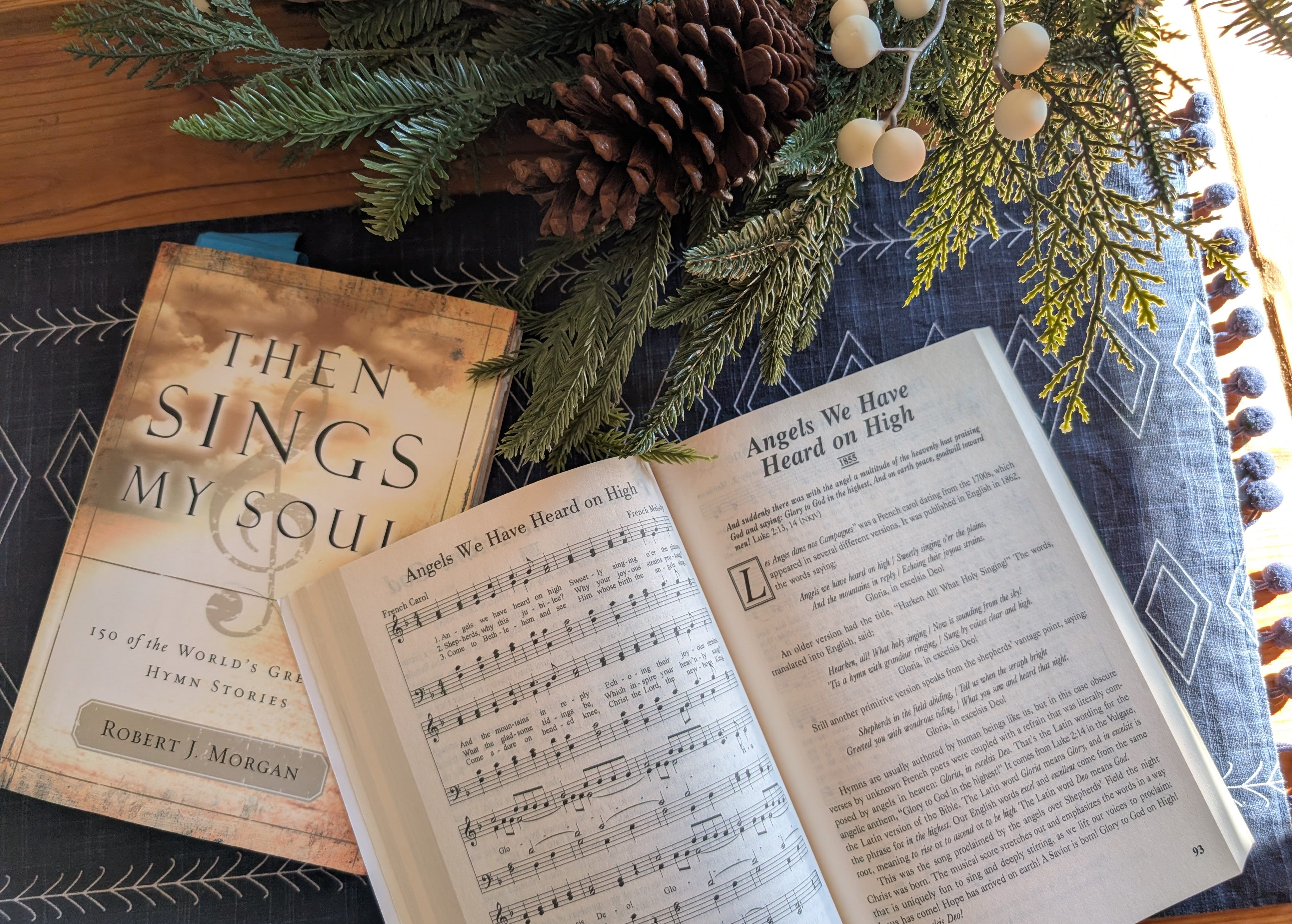
- Singing Old Hymns — I love these books: Then Sings My Soul Trilogy by Rob Morgan. The pages contain the hymn on one side and the story of how it was written or rediscovered on the other.
Use Different Translations:
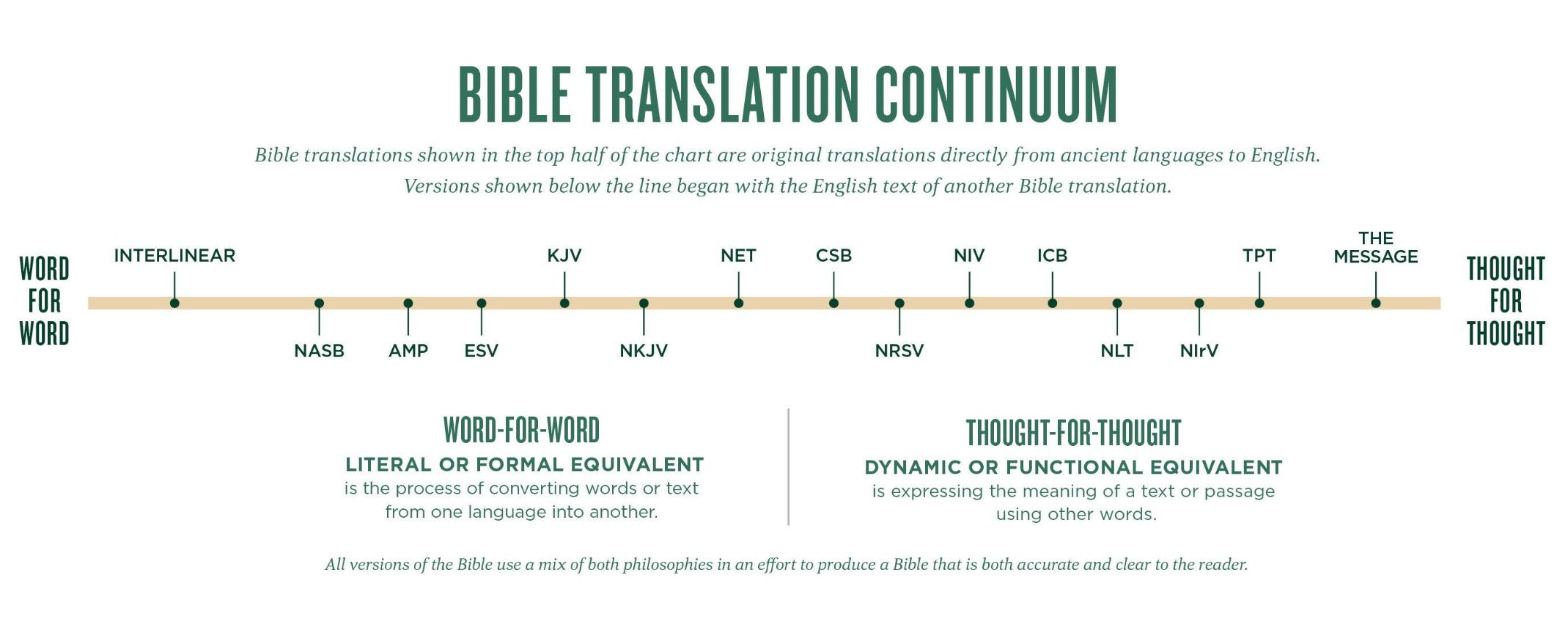
I’m not trying to stir up any theological debates, but I believe that there is a benefit to reading different Bible translations. If you have gotten used to a specific translation (like NIV) switching to another one (NASB for example) can give you opportunities to see things you might have missed before.
Because the original manuscripts have been translated from 3 languages (Hebrew, Aramaic, and Greek) the translation approach can change how you understand sections of scripture. I like to look at the same passage in a “word-for-word” then also a “thought-for-thought”.
Here is a quick overview of the common translations:
Try a New Study Method:
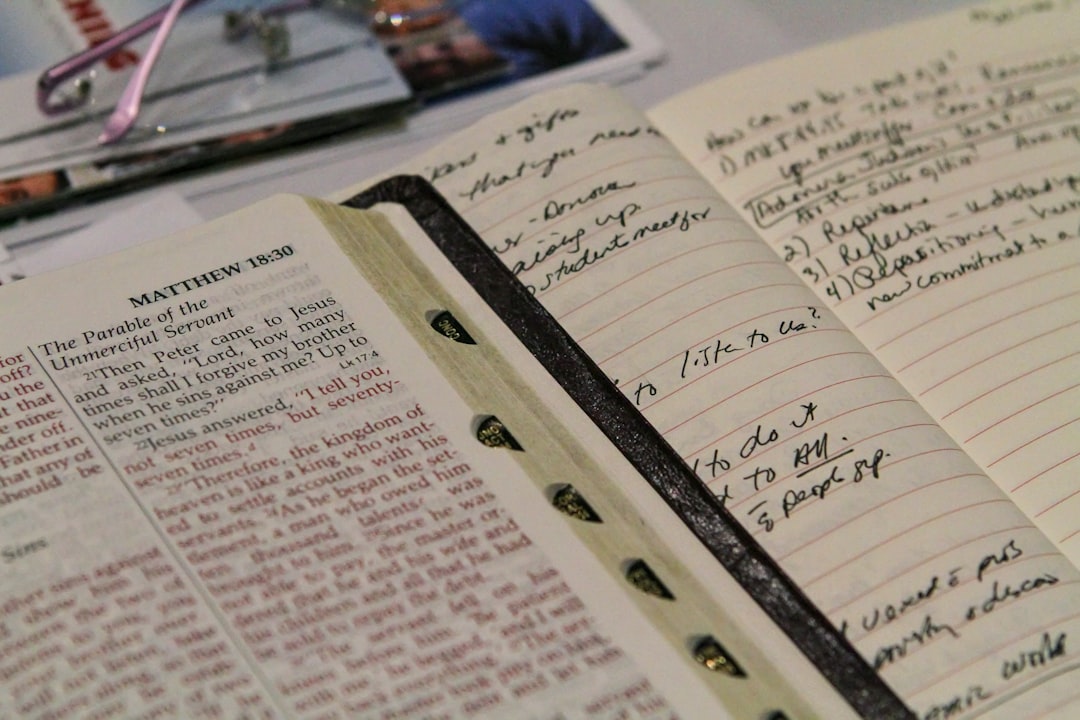
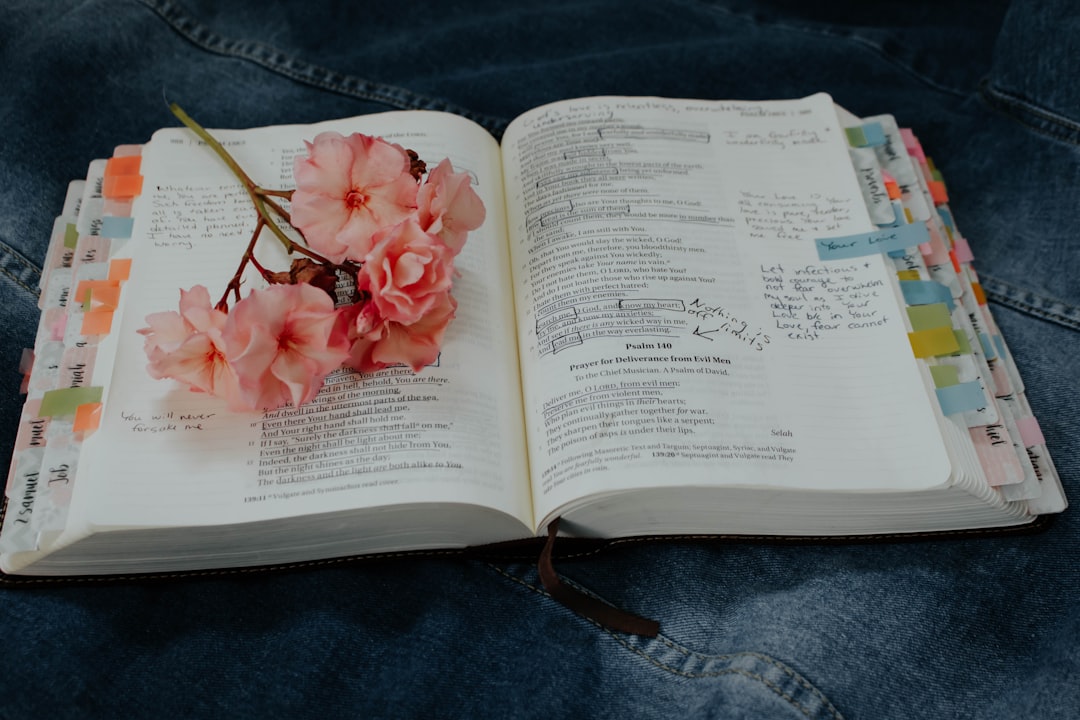
- Notetaking & Highlighting — Study what interests you and underline what grabs your attention, find key words in passages, or circle words that repeat in a chapter. There is no wrong way to mark up your Bible. Check out this post: Notes in the Margins – Annotating & Journaling
- Word Studies — Examine how a specific word is used in other verses by the same author and then throughout the rest of the Bible. Using a dictionary, note synonyms to see its full range of meanings.
- Topical Studies — Choose a phrase or idea that you want to study deeper.
- Check out these resources for a variety of ways to learn and grow in your faith: Every Woman a Theologian
- Geographical & Historical Context — These focused study topics reveal how ancient landscapes, daily survival needs, and political climates profoundly shaped biblical events, mindsets, and theology. It uncovers a vivid, three-dimensional perspective. Some fun topics to try out:
- Mountains, Valleys, and Elevation of specific areas listed in the OT & NT
- First-Century Domestic Geography – Study what daily life and houses looked like
- The Roman Road System: how the extensive Roman road networks provided infrastructural rapid spread of the early Church.
- Journaling Bibles — These types of Bibles have very wide margin space for notetaking and journaling.
Please share this post!
Get a Bible with a Unique Organizational Method:
The structure of the Bible is unique. It consists of 66 distinct books, written by approximately 40 different human authors, across 3 different continents (Africa, Asia, and Europe). It was written over a span of roughly 1,500 to 1,600 years in three original languages (Hebrew, Aramaic, and Greek).
I have found it helpful to use Bibles (and Bible resources) that restructure scripture from the typical format.
- Chronological Bible — This organizes the Bible in the order that events happened instead of the book they were written in. For example the Gospels are 4 different eyewitness accounts of the life of Jesus. In my Chronological Bible events that happened at the same time are divided up and placed in order side by side.
- Archeological Bible — The one I have on my shelf contains a ton of maps, artifact details, historical perspective articles, and connections to cultural celebrations. It helps readers strip away modern 21st-century assumptions and re-enter the mindset of the ancient Near East and first-century Greco-Roman world.
- Lectio / Immersive Edition — This is a Bible that looks more similar to the original organization without chapters or verse numbers. A clean layout strips away the visual clutter of footnotes and cross-references. This allows you to engage with Scripture as literature for spiritual formation rather than a textbook for analysis.Photo by Tim Wildsmith on Unsplash
Include Accountability:
As with anything in life, it can be hard to walk the path alone. Going to church, joining a small group, attending a Bible Study are all ways to strengthen your understanding and faith.
Whenever I am learning alongside others I get insights that I would have never seen on my own. There is value in accountability and creating relationships with others who have the same faith.
My church community is amazing, and I am thankful to be a part of it and to volunteer my time to make it even better.

I would love to hear from you!
Please share any resources that have helped you in your faith.
No matter where you are in your faith journey, I am confident that one of these ideas will help you revive your Bible study and moments alone with God.
As I was writing this post I was reminded of the variety of ways over the years that I would study, pray, and connect with God. I too will be adding a few to my daily routines and afternoons when I have a random sliver of time.
🪻Have a beautiful day! —
