there is more to this new trend than a stack of books
Last week I began to feel anxiety and low-level overwhelm.
I have these analogies that I use of an octopus being stretched in many different directions or wildly spinning 8 different plates. That is often how I feel with all of the different jobs and roles that I am responsible for.
Somewhere around the middle of last week, this low-level anxiety hum began to fill my brain. Something needed to be changed or fixed but I couldn’t quite but my finger on it.
I have been sick for the past 2 weeks and so I’ve been sleeping in due to fatigue. I hadn’t done my brainstack or had time for my normal weekly planning. (The brain stacking term and specifics are new but I’ve been using this concept for years.)
I’m still battling some tiredness and brain fog, so my problem solving skills have been a bit delayed. Yesterday after I finally sat down at my desk I realized I only had 30 minutes before I had to take my teen somewhere and make dinner.
“I just really need some planning time!” I grumbled to my stack of notebooks. (They offered no solutions.)
The next morning I got up early and the idea came to me that I could have my planning and brainstacking time in my quiet kitchen. It was totally motivating!!
I did my morning routine and then gathered my notebooks, pens, and books. I couldn’t stop smiling. Before I even sat down at the table I felt more like myself! It was wonderful.
This is what I hope for you, dear reader. 💙
Since I’m anti-gatekeeping let’s start this off with what the term “brainstacking” is.😜
the practice of stringing together a few small, intentional activities that wake up different parts of your mind (journaling, books, hobbies)
you give yourself a chance to read, write, think, solve, or make
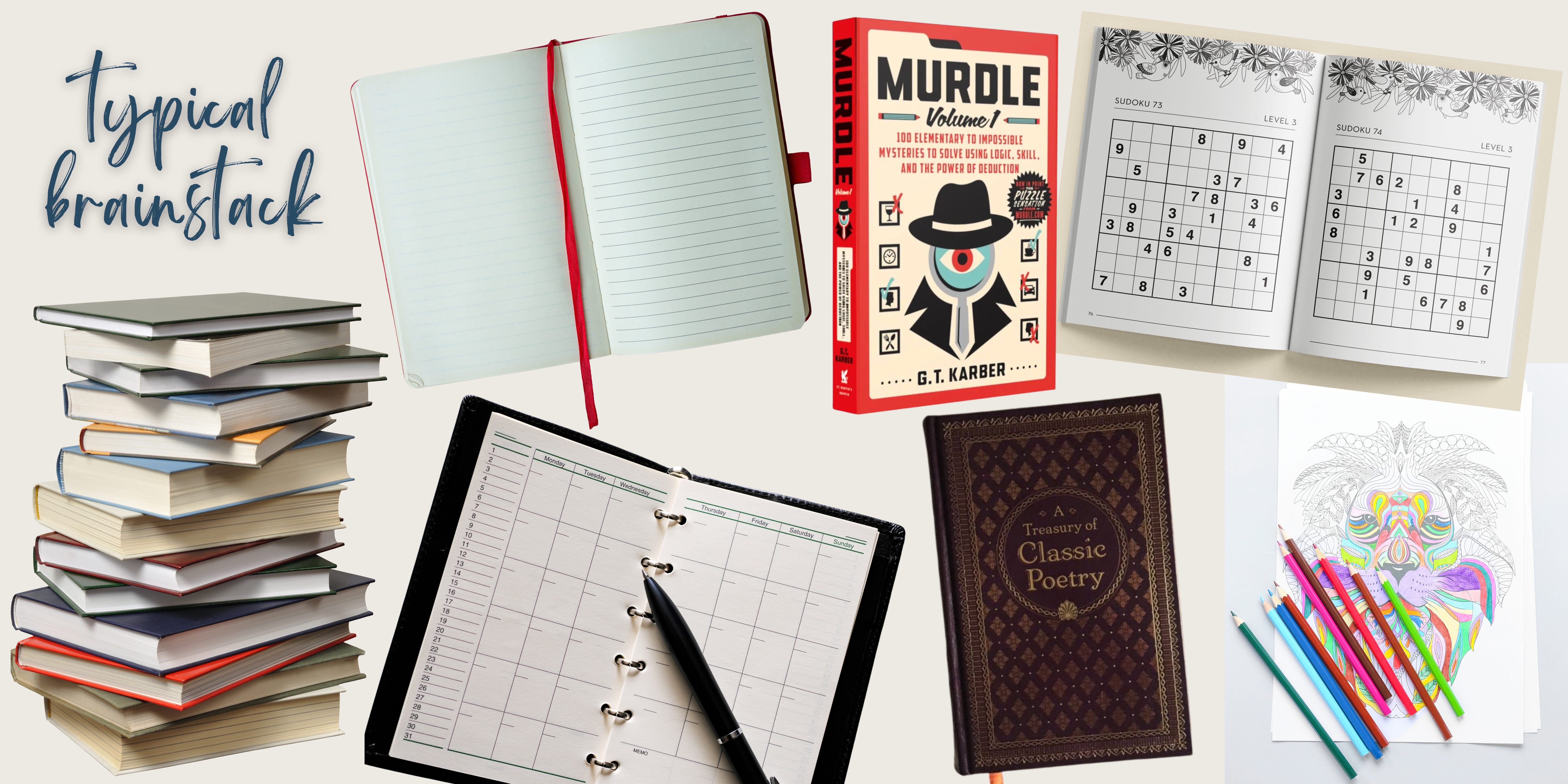
a typical brainstack session combines 3-5 activities that engage different parts of the brain, with common options including:
– Journaling or a personal “brain dump” of thoughts
– Word puzzles, Sudoku or other logic games
– Short non-fiction reading sessions
– Coloring, tracing or other low-stakes creative tasks
– Planning or organizing personal To-Do lists
The core rule is to chain these activities in sequence, rather than switching between them randomly. It is often timed using the pomodoro technique.
It’s a collection of activities that gets your mind moving without phone use.
It’s a routine taken from the personal curriculum approach. 1
a typical brainstack lineup (made by me)
A few things I like about this approach:
It isn’t just about avoiding your phone. It’s about being intentional with what gets your attention.
It makes room for intellectual curiosity. Reading a few pages, working through a puzzle, jotting down an idea, or sketching something all count.
It doesn’t have to be another elaborate morning routine. You can build a stack that takes 10 minutes or 45 minutes. And you don’t have to do it every day.
Creativity vs. consumerism. It encourages you to be a participant in your own life rather than a consumer of everyone else’s.
So, overall I think it’s a great idea,
but there would be a few things I would change…
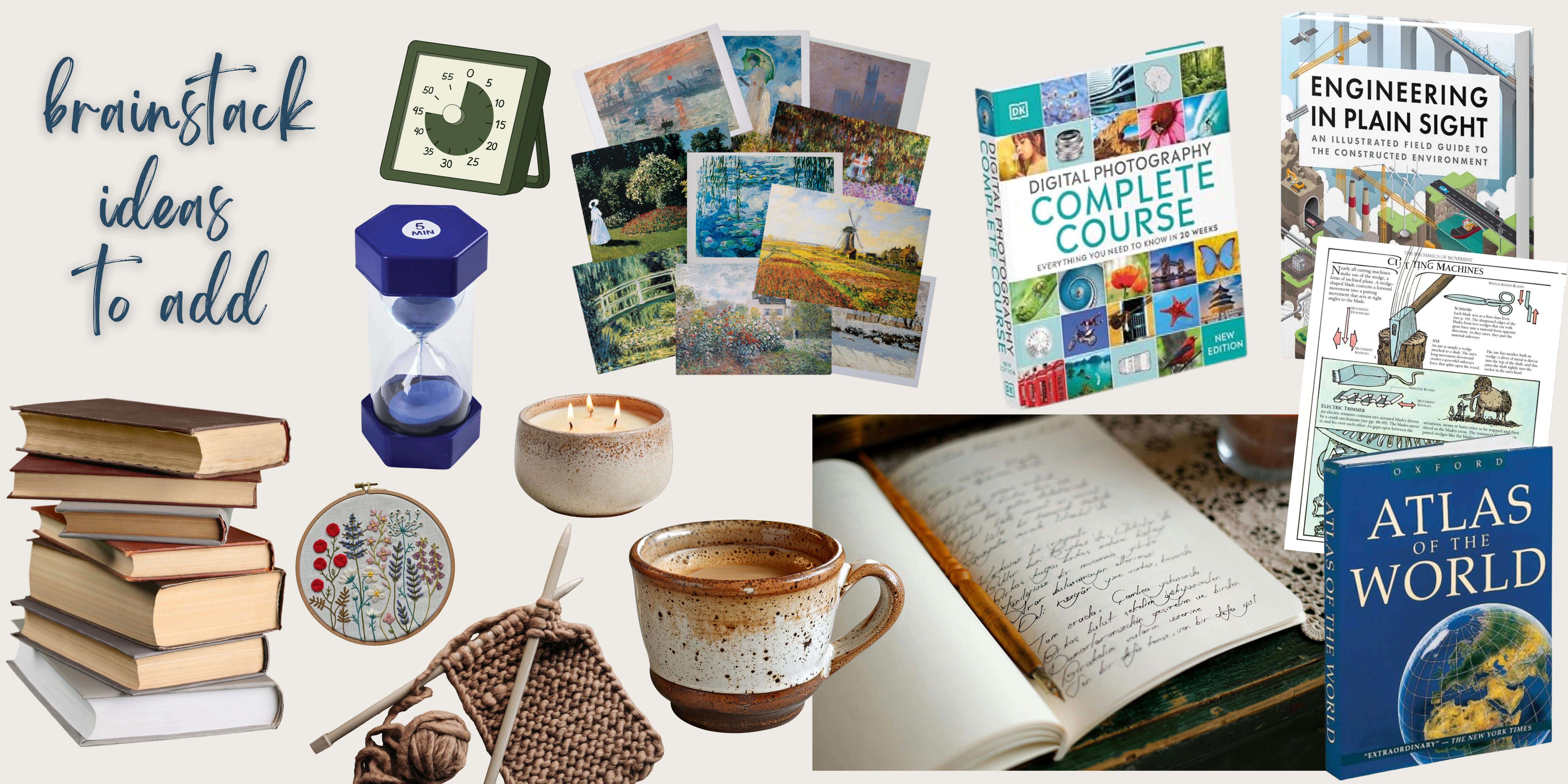
my brainstack additions (made by me)
What I do differently:
use soft ending / silent visual timers — Instead of timers that beep and take you out of the task you are focused on, using sand timers or visual clocks can help keep you immersed in reading, problem solving or notetaking longer. (Obviously only works if you have time for your brainstack to take longer that day.)
add variety to your reading — Charlotte Mason has a saying that goes: “I always keep three books going: a stiff book, a moderately easy book, and a novel, and I always take up the one I feel fit for!”2 And many have added to that a book of poetry.I love that no matter what mood I am in I have a book waiting for me that I am excited about.
simple handicrafts — Repetitive, easy movements cause our brains slow down and relax (it’s like an inner sigh of relief, “aaahhhh…”😮💨)
definitely include journaling — But the type of journaling can be unique to you and your current needs. Some days the vibe might be more list making, others morning pages style (stream of consciousness writing), and at times it might be emotional processing or copying underlines from your non-fiction read.
create a cozy ritual — Taking a few moments to make spending time on your brainstack special (with a favorite drink, lighting a candle, a playlist, cozy throw blanket) can trigger your brain to associate the activity with positive feelings. BJ Fogg writes in Tiny Habits, “People change best by feeling good, not by feeling bad.” So let’s make exercising our minds feel good, too.
study Engineeringto increase neuroplasticity — Every time you learn a new concept or figure out how something works, your brain physically changes its internal structure to support that knowledge. This builds new neuro pathways in your brain.
add in other subjects — Find other subjects that interest you and add in small ways to study or learn more.
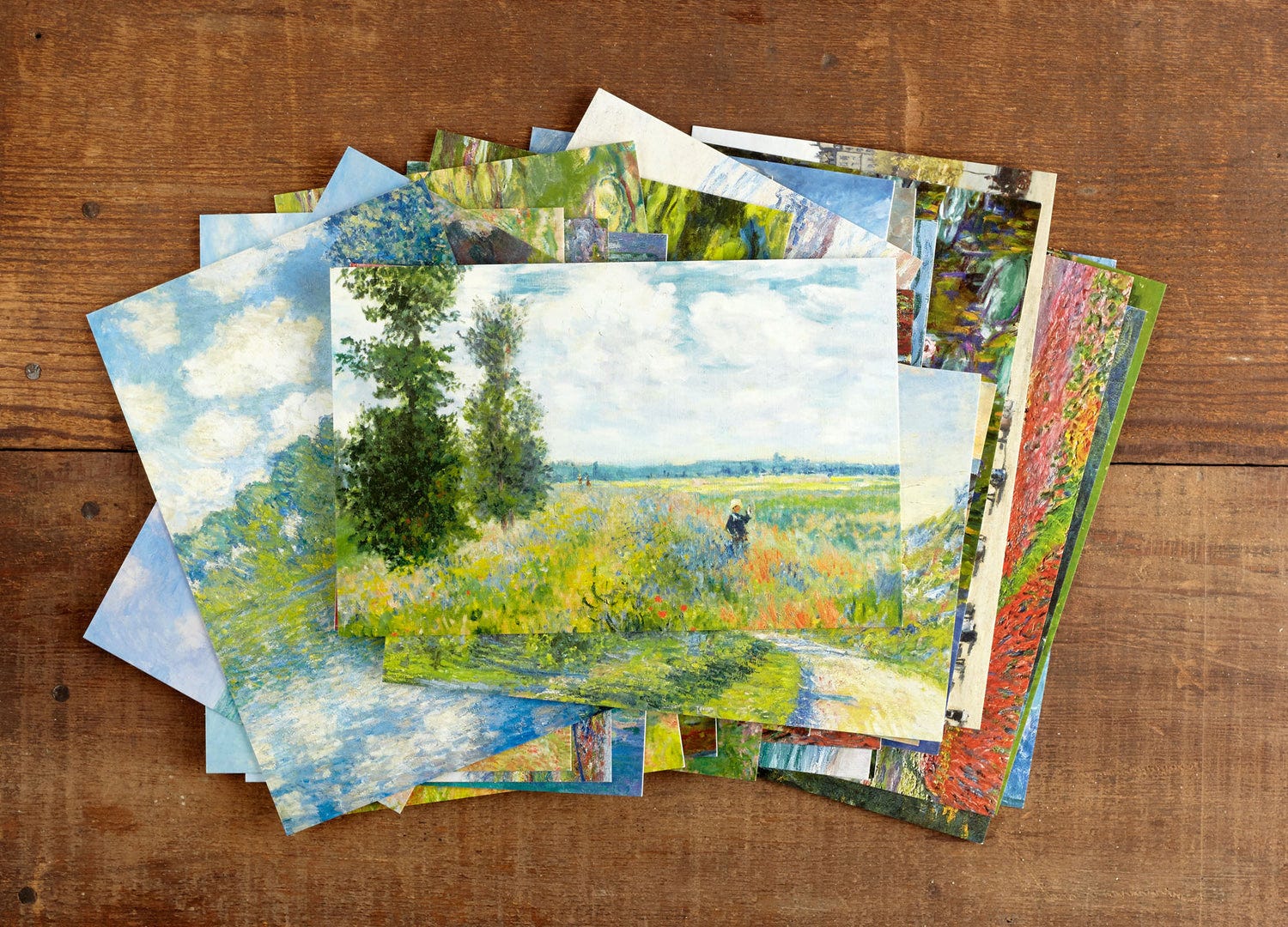
Art Masterpieces: spend a few minutes looking at postcard collections from famous artists. What is happening in this painting? Who or what are the subjects? What does this painting remind me of? What details do I notice?
The key is to pick things that you are excited about and be intentional about those few things. Don’t make your list too long or something that annoys you.
> > moment of vulnerability here😟… I don’t like sudoku puzzles.
So you will not find those evil things, I mean, excellent number puzzles in my brainstack.
photo from Pinterest
📋free PDFs & resources:
Here’s a collection of resources that I’ve made that will help you with planning out Brainstacks and prepping for Brainstacking:
my photo – commonplace notes on Atlas of the Heart by Brené Brown
Let’s look at some simple math.
Spending time reading every day adds up.
even just 5 pages a day = 35 pages a week
which is 140 pages per month
and almost 2,000 pages a year.
that’s about 6 – 8 books.
I think that if you intentionally create a stack of books you want to read and enjoy and then spend even just a few times a week it will make an impact.
Brainstacking doesn’t have to be perfect to work.
“People read for a multiplicity of reasons. Nearly forty years in, I can tell you why I inhale books like oxygen: I’m grateful for my one life, but I’d prefer to live a thousand –and my favorite books allow me to experience more on the page than I ever could in my actual life.”― Anne Bogel, I’d Rather Be Reading: The Delights and Dilemmas of the Reading Life
and if when you run into frustrations or roadblocks,
When discussing this trend with my teen daughter she thinks the hardest part is getting started.
Lara said, “It’s easy to find things you’re excited about, but when you go to do it, it’s not as exciting. The issue with Doom scrolling is that it’s completely mindless. You can numb out. Whereas brain stacking and hobby tasks are resting with without giving your brain of complete break. Which in the end ends up being more restful, but it’s hard to convince yourself to do it.”
Which is why I think sand timers can be so helpful. My requirement for myself is that I work diligently until the sand is gone and then I can stop if I really want to. I find if I tell myself to work for just “10 minutes” (or whatever the pre-set time is) knowing I can stop helps me get into the groove.
Here are some planning pages I made that will help!
Make a plan, do what you can, and make changes if something doesn’t work.
It is important to lean into autonomy and not create structure that makes you feel constricted. But there is also a balance of pushing and stretching yourself when you are starting something new.
Only you know where that line is.
Share what is working for you and what you are loving in your brainstacking!
Must give credit!! From what I have found, it seems that Mandy Rulez 🪐✨🔮 on TikTok started the name and vibes of this trend. Her library hobby posts are super inspirational!
Charlotte Mason has a saying that goes: “I always keep three books going: a stiff book, a moderately easy book, and a novel, and I always take up the one I feel fit for!” — from an article titled “Mother Culture” published in 1892, The Parents’ Review
If any of these personal curriculum tips and ideas resonate with you, please check out my online course: How to Build a Personal Curriculum
Building this class was honestly so satisfying and fun, and I think you’ll feel that energy as you move through it. It is highly practical and full of simple steps to apply in the midst of your busy life.