restful productivity tips for your busy fall season (+free PDFs)
Here is the problem:
I am someone who needs to (and actually wants to) get a lot done. I have a high-capacity but I can feel overwhelmed and confused without structure.
My life is full with lots of areas that I juggle and manage.
But I also want some space for things that I enjoy and care about. Learning, reading and hobbies that matter to me and make me feel grounded.
I want to know that what I am spending my time on is taking myself, my household, and my goals in the right direction.
And here are my favorite solutions:
Block Schedules and Loop Lists

I’m so excited to share these with you!
(and don’t miss the free PDF planner pages I created)
😁Let’s jump into it!
Block Schedules —
Let me start of by explaining that I’ve been using this idea for over 20 years.
It started when I was a classroom teacher, then I applied it to my stay-at-home mom life. Next came toddler parenting, then the early days of PreK & elementary homeschooling, and now block schedules keep my teaching/writing/volunteer work/teen taxi-cab life going.
Yes, I do have a lot of autonomy and control over my daily schedule, but I’ve also applied this idea to my after-work hours or weekends when I had a full time job. I fully believe that you can make the most with whatever you have to control. 😉
The key to Block Schedules is to structure my days with areas of focus so that I’m not trying to do everything all at once.
It is helpful to give my attention to one area/theme at a time.
Some examples of blocks:
- work
- sleep
- meals & mid-day breaks
- daily household tasks
- baby or toddler nap time
- deep cleaning
- workout / exercise
- faith / church / small groups
- social time / connection
- self-care routines
- family time / movie night / game night
- volunteer work
- reading / creative hobbies
- meal planning & prep
- running errands & grocery shopping
- laundry
- rest / downtime
I might get to all of these over the course of a week, but within a day I will have 6-8 that I focus on or schedule in my blocks.
Each area/theme has it’s own list (priorities and tasks) that I am focused on at that time.
Here are a few examples:
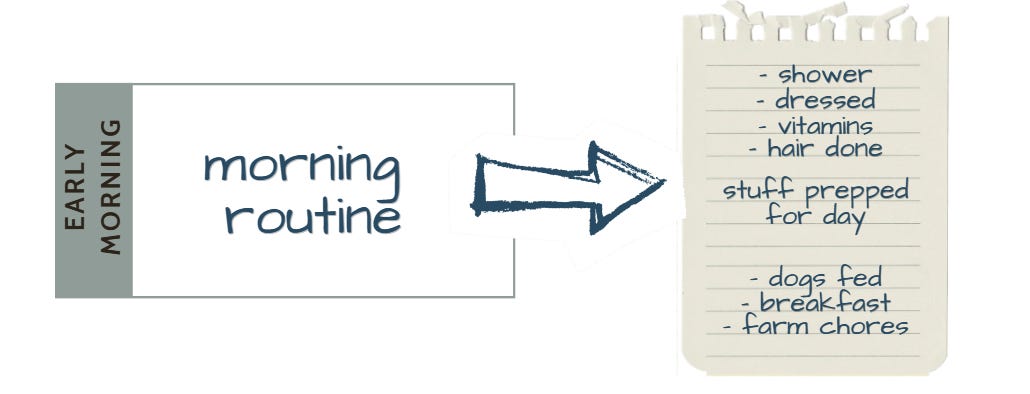
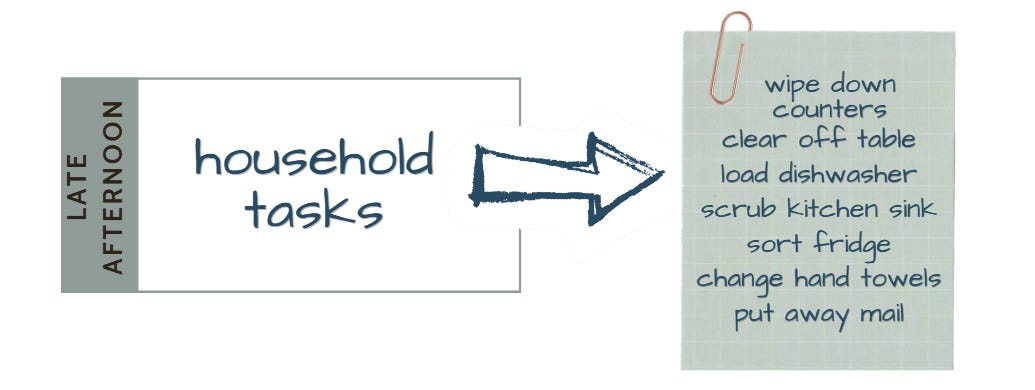
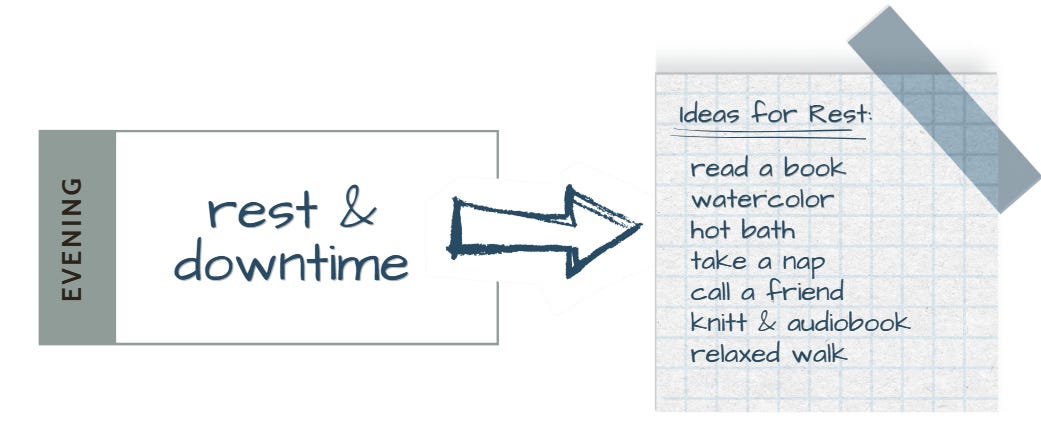
When I put that block into my schedule I know what kinds of tasks I will be focused on.
Then I give myself permission to let everything else go.
If I am in my rest block and I’m listening to an audiobook, my mind does not need to list out household tasks or grocery store items I need. I will get to that stuff at another time (or another day) and so I can let them go. Or if my brain is insistent, then I pause and write it down in my Notes app and return to my book.
When I’m doing school work and teaching I try to ignore all the household tasks and I even put my phone on “Do Not Disturb” so I’m not getting distracted by texts.
You get the idea… 😁
Here are some free PDFs I created to help you structure a block schedule:
Block Schedules Tips —
- go with your natural rhythms
- You are probably already applying this idea but didn’t put intention towards it. Start with where you are and make adjustments, not a whole new plan.
- do an honest time audit
- Are there pieces of your day that disappear? Why?
- let your days be different
- choose to prioritize and you might be surprised at all you can do within a week
Block Scheduling gives me the ability to focus and also the permission to let other stuff go.


Loop Lists —
This restful productivity tool is basically just a thoughtful task list that I use on repeat.
I was reminded of these recently by Niamh Celeste in our Chapter 3 Book Club post and realized that I haven’t shared this valuable productivity tip with my Substack community.
When I have a specific list of tasks that I want to do in a unique area. I create a loop list. This works well for creative work, weekly or monthly household tasks, different types of learning, and adding variety to my schedule.
It’s a great way to remember an occasional task that gets forgotten or something fun that I want to add in to my creative life.
I tend to get stuck in a rut and my Loop Lists help me break out of that monotony.
What’s fun about these is that I do all of the thinking at one time and then it’s just waiting for me to pick it up and take the time to do it.
Here are a few examples:
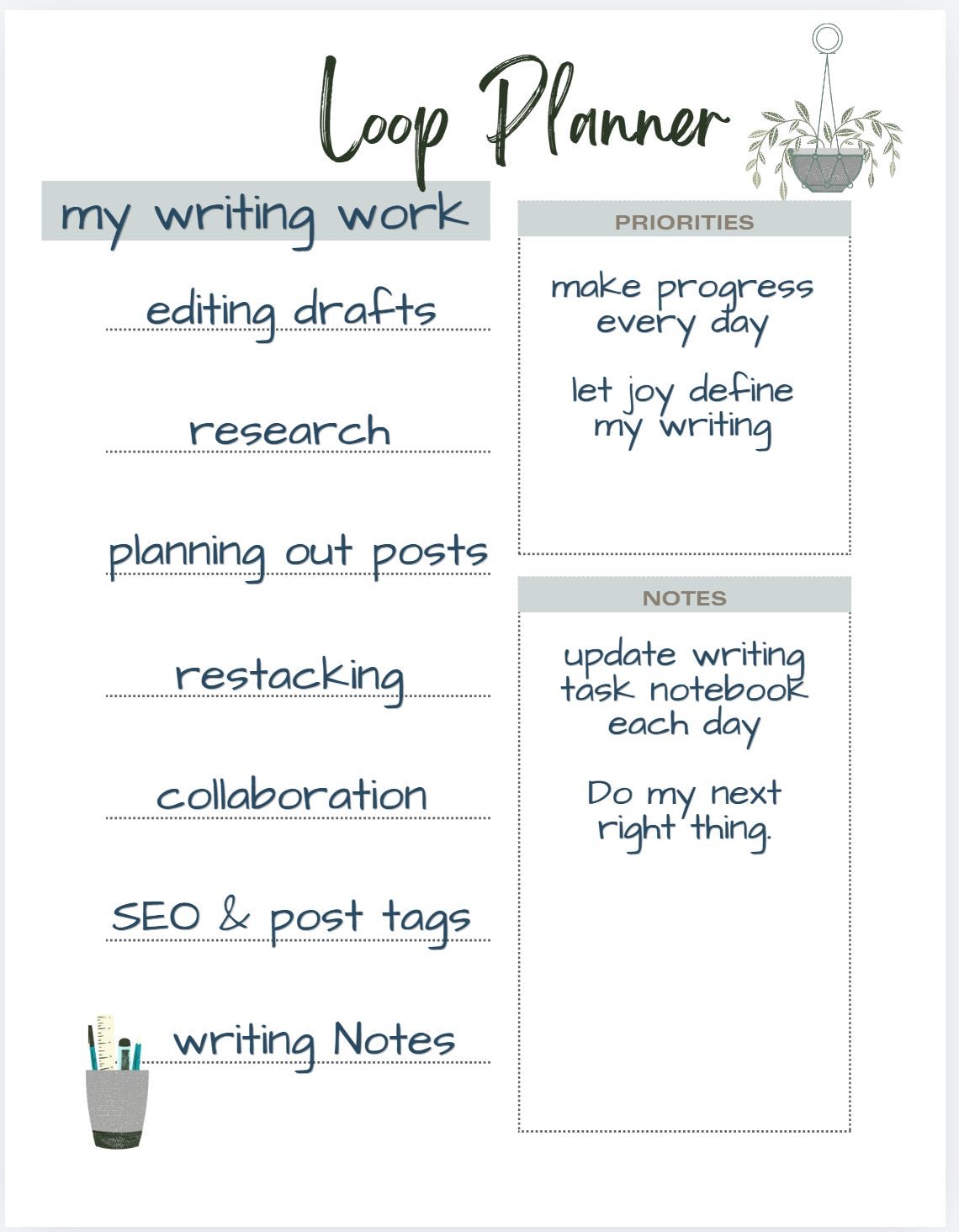
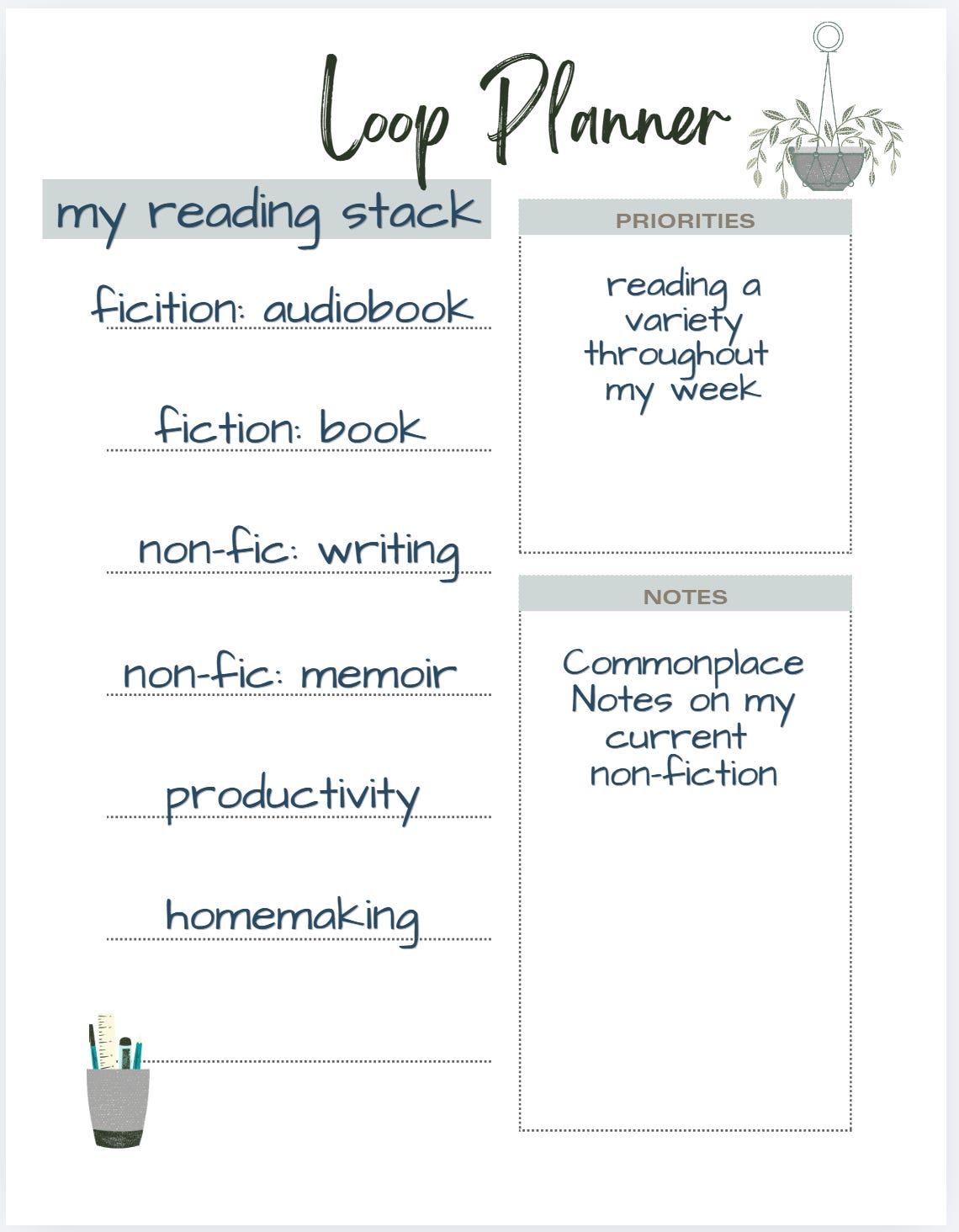
this can also be done with meal planning:
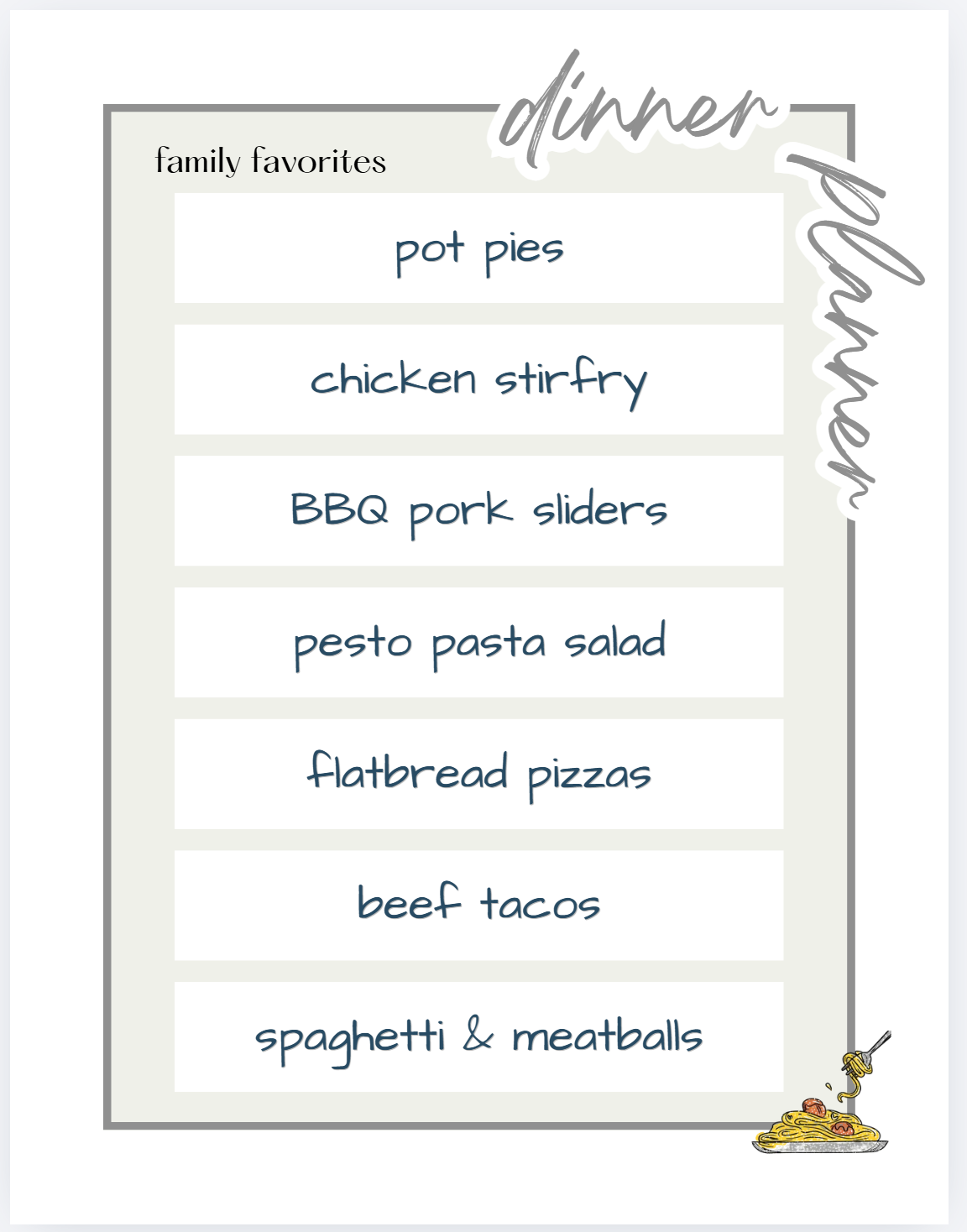
Notice I don’t have specific days or dates assigned to these meals. I just make sure I have on hand the ingredients for each of these meals and then when it’s time to make a dinner at home I make the next one on the list. Depending on nights out and scheduled events, it might take 2 weeks to get through this list.
The same is true for my writing and reading stack examples. It might take a week or more to get through the list but that is okay.
Here are some free PDFs I created to help you structure your loop lists:
Loop List Tips —
- be creative with it
- choose stuff you actually want to do (no ‘shoulds’ or guilt😝)
- add variety & change things up
- change the genre, type of activity, room your cleaning, protein your cooking with, or creative inspiration
- think in larger amounts of time
- What would you want to get to this week? This month?
Loop Lists remind me create a variety of tasks in one area.
When trying out new productivity tools there will be some trial and error. I view adjustments and failures as information for learning and try not to get discouraged when I need to make changes.
I try to think of BJ Fogg’s advice of the basics of habit change: increasing skills, getting tools and resources, and making the things easier to do by scaling them down to small steps.
I hope these productivity tools help you in your next week!
Please share if you use blocks or loops and what works for you.
You’ve got this!!

If you are looking for support in new habits or routines, check out Book Club!
We are on Chapter 3 but you can jump in anytime.